

Hybrid work gives teams more freedom, but it also creates new gaps. We see this often. Some people are in the office, some are at home, and others switch between both. When that happens, shared responsibility can weaken if the team does not build it on purpose.
Collective responsibility in hybrid workplaces means that people feel responsible not only for their own tasks, but also for the quality of the team’s shared results.
This is not only about rules. It is about awareness, habits, and daily choices. In our experience, teams become stronger when people stop asking, “What is my part only?” and start asking, “What does the group need from me today?” That shift changes the tone of work.
Why hybrid work makes shared responsibility harder
Distance changes perception. In a shared office, we notice delays, tension, or silence faster. Online, many signals disappear. A missed message can look like carelessness. A late reply can feel personal. Sometimes it is neither. It is just poor structure.
We also need to admit something simple. People do not live the same reality. Research on working from home across 40 countries shows that hybrid schedules are especially common among parents, and that hybrid work has become more stable after earlier changes. This matters because shared responsibility grows better when teams respect different life contexts instead of pretending everyone works under the same conditions.
Fair does not mean identical.
When leaders ignore these differences, frustration rises. When teams name them clearly, trust has room to grow.
Start with clear agreements
We think many team problems are not caused by bad intent. They come from vague expectations. In hybrid settings, clarity must be visible, simple, and repeated in practice.
A team agreement should answer daily questions such as:
- When do we expect replies for urgent and non-urgent issues?
- Which meetings require cameras, and which do not?
- How do we document decisions so remote and in-office people see the same thing?
- What does ownership look like when a task affects several areas?
These agreements should not be long or rigid. They should be easy to use. We have seen teams improve after writing one shared page with response times, meeting rules, and handoff steps. Nothing fancy. Just clear.
People are more likely to act responsibly when the group defines what responsible behavior looks like.
Make work visible without turning control into pressure
One of the fastest ways to weaken trust is to replace responsibility with surveillance. Hybrid teams do not need more monitoring. They need better visibility.
There is a difference. Monitoring asks, “Are you active right now?” Visibility asks, “Can the team see progress, blockers, and next steps?” The second question creates shared awareness.
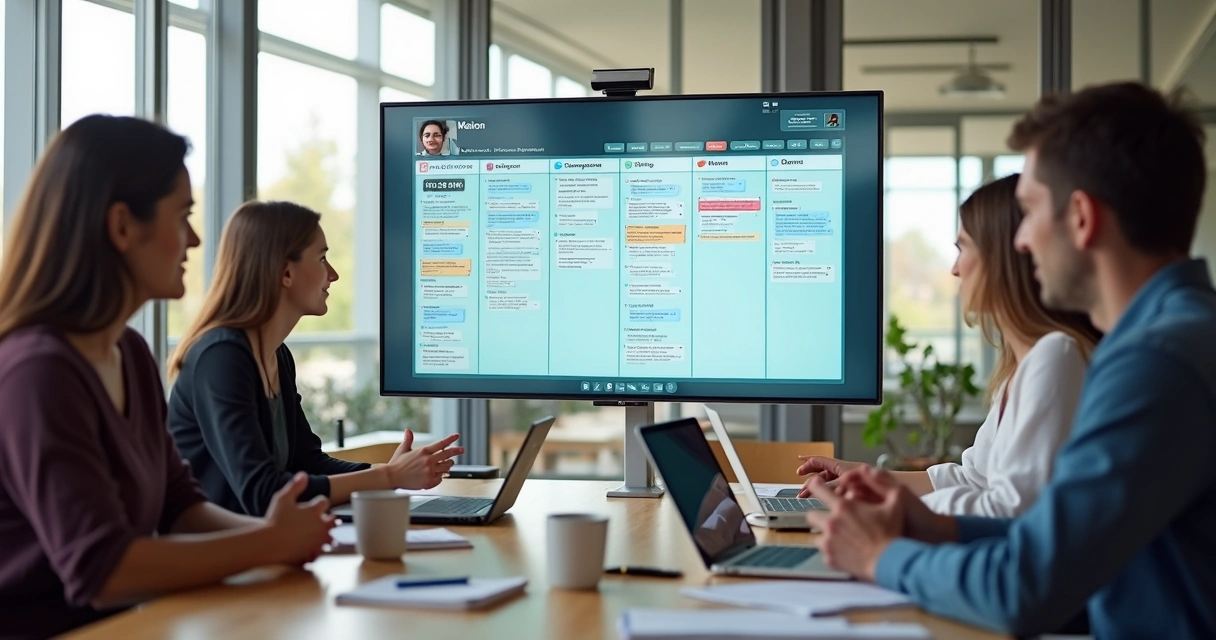
Useful visibility often includes:
- Shared task boards with owners and deadlines
- Weekly written updates with wins, risks, and needs
- Meeting notes stored in one place
- Simple status labels for work in progress, waiting, or done
We once saw a team argue for weeks about missed handoffs. Each person felt unfairly blamed. When they started posting a short end-of-day note on shared projects, the tension dropped fast. The issue was not laziness. The issue was invisible work.
Build a culture of mutual follow-through
Collective responsibility grows when people know they can count on one another. That trust does not come from speeches. It comes from repeated follow-through.
We encourage teams to make commitments in public spaces when the work is shared. Not to expose anyone, but to create alignment. If someone says, “I will send the draft by 3 p.m.,” the team should know it. If the draft will be late, that should be said early, with context and a revised plan.
This creates a healthier pattern:
- People commit clearly.
- Progress stays visible.
- Delays are named early.
- The group adjusts without blame.
That fourth step matters a lot. If every delay leads to shame, people hide problems. If teams can speak honestly, they solve issues while there is still time.
Accountability becomes collective when the team treats truth as more useful than appearance.
Reduce the office versus remote divide
Hybrid work can split teams into two emotional groups. Those in the office may feel they carry the social load. Those at home may feel forgotten during fast decisions. Both sides can become defensive.
We need to design against this split. A few practices help:
- Document decisions made in hallway moments
- Use one meeting format for everyone, even if some are in the same room
- Rotate high-visibility tasks and speaking roles
- Judge contribution by outcomes and support, not by physical presence
Small things change a lot here. We have seen remote team members go quiet because side comments in the office took over the meeting. One adjustment, using each person’s laptop audio even in the same room, made participation more balanced. It felt awkward for a week. Then it felt normal.
Train leaders to model shared ownership
Leaders set the emotional standard. If they claim to want shared responsibility but keep rescuing every problem alone, the team learns dependence. If they blame people in public, the team learns silence.
Better leadership in hybrid work looks calm, direct, and consistent. Leaders can model this by:
- Asking for input before fixing a problem
- Naming trade-offs openly when priorities clash
- Admitting their own misses without drama
- Giving credit across locations, not only to visible people
A leader once told us, “I thought I was being helpful by stepping in all the time.” The team experienced it differently. They felt watched, and also less responsible. When that leader moved from solving to coaching, ownership spread across the group.

Create rituals that reinforce the group
Rituals help teams act with more intention. We are not talking about empty routines. We mean repeated moments that remind people they belong to one working system.
Good hybrid rituals often include:
- A weekly team check-in focused on risks and support needs
- A monthly review of what is working and what is causing friction
- A shared practice of thanking people for cross-team help
- A clear closeout process after projects, with lessons learned
These rituals matter because responsibility is relational. People support what they feel part of. When work becomes only transactional, people protect their own corner first.
Conclusion
To foster collective responsibility in hybrid workplaces, we need more than software and meeting rules. We need visible agreements, honest communication, and leadership that treats responsibility as a shared practice. Hybrid work can either fragment a team or mature it. The difference is rarely technical. It is cultural.
When teams know what is expected, when work is visible, and when people can speak early about obstacles, shared ownership becomes real. We believe the goal is not perfect control. It is mature cooperation. That is what allows people in different places to still work as one team.
Frequently asked questions
What is collective responsibility in hybrid workplaces?
Collective responsibility in hybrid workplaces is the shared commitment to team results, not only individual tasks. It means people take ownership of communication, deadlines, support, and problem-solving across remote and in-office settings.
How to encourage team accountability remotely?
We encourage remote accountability by setting clear expectations, making work visible in shared systems, and asking people to communicate delays early. Regular check-ins, written updates, and documented decisions also help teams stay aligned without constant supervision.
What are challenges of hybrid team responsibility?
Common challenges include unclear expectations, uneven access to information, office bias, delayed communication, and different home realities. These issues can create confusion or resentment if teams do not address them openly.
How can leaders build collective responsibility?
Leaders build collective responsibility by modeling follow-through, creating fair team norms, sharing context, and avoiding blame-based management. They also need to treat remote and in-office staff with the same level of trust, visibility, and respect.
What tools support collective responsibility online?
Online support comes from shared task boards, team chat platforms, meeting notes, project trackers, and simple reporting systems. The best tools are the ones that make commitments, progress, and blockers easy for everyone to see and discuss.