

Many conflicts do not begin with loud words. They begin with a pause that feels colder than usual, a shorter answer, a look that hardens, or a breath that changes pace. We have seen this in homes, teams, friendships, and partnerships. The shift is small at first. Then it grows.
Presence helps us notice conflict before it turns into damage.
When we speak of presence, we mean a grounded form of attention. It is the choice to stay awake to what is happening in us, in the other person, and in the space between both. Not frozen. Not reactive. Aware.
This matters because relational conflict often harms people long before it reaches a formal breaking point. In a 2025 survey of workplace conflict in Great Britain, 44% of working-age adults reported conflict in the past year, and 57% of those said it led to stress, anxiety, or depression. More than half of those conflicts were handled through discussion rather than formal procedures. That tells us something simple. A lot of conflict lives in daily interactions. So our ability to sense escalation early is not a minor skill. It changes outcomes.
What presence lets us see
In our experience, escalation rarely appears out of nowhere. It leaves traces. Presence lets us catch those traces while there is still room to act with care.
We may first notice the body. A jaw tightens. The shoulders rise. One person starts speaking faster, while the other becomes clipped and flat. Then the meaning of words begins to shift. Questions start sounding like accusations. Explanations sound like defense. Silence starts feeling loaded.
Escalation has a rhythm before it has a result.
Without presence, we often miss this rhythm because we are busy preparing our reply, defending our image, or proving our point. With presence, we can observe the movement of the exchange in real time.
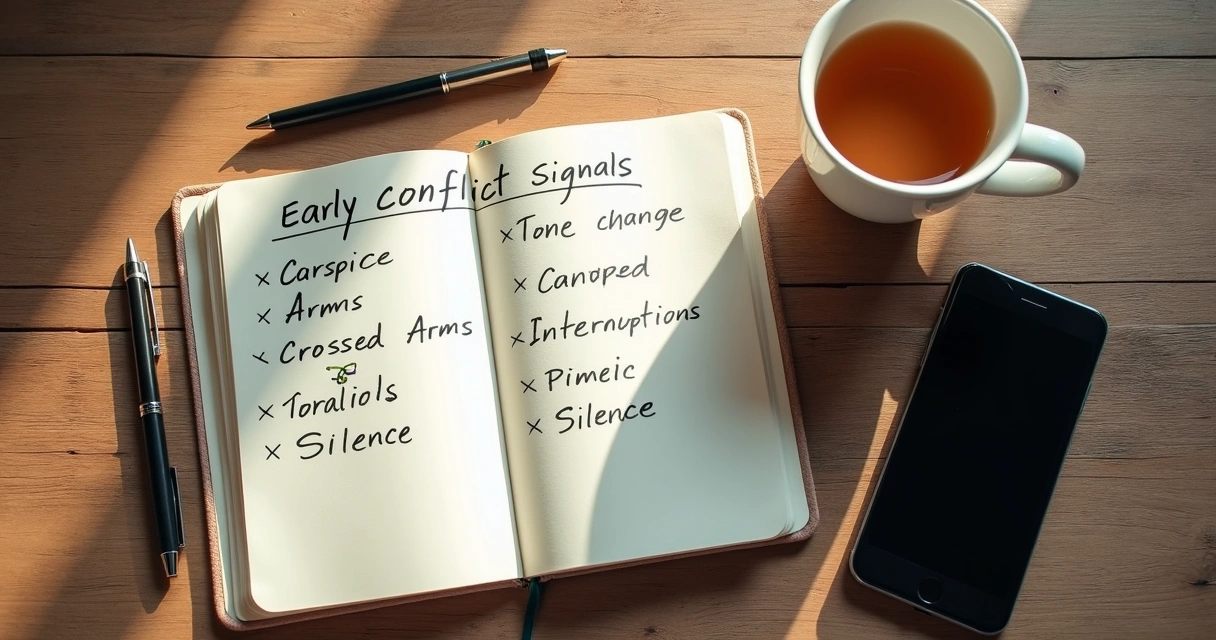
Some signs are easy to spot when we slow down:
- Interruptions become more frequent.
- Volume, speed, or sharpness in the voice increases.
- Faces lose softness and become fixed.
- Words move from the issue to the person.
- Past grievances enter the room.
- One or both people stop listening and start collecting evidence.
These shifts may last only seconds. Still, seconds can decide whether a conversation stays workable or turns hostile.
Why voice changes matter
Sometimes people say, “I did not even notice we were escalating.” We understand that. Conflict can pull attention outward so fast that inner perception drops. Yet the body keeps signaling what the mind may miss.
One of the earliest markers of escalation is a change in vocal tone, intensity, and pitch.
That is not just personal impression. Research on speech patterns during escalation found that higher escalation is linked to rising pitch and stronger vocal intensity. In simple terms, the voice carries signs of intensification even before people name what is happening.
We have all felt this. Someone says, “I am fine,” but the voice says otherwise. Or a discussion still sounds civil on the surface, yet the tone has already moved into strain. Presence helps us listen beneath the literal words, without becoming suspicious or dramatic.
That kind of listening is quiet. It does not jump to conclusions. It notices.

How presence interrupts the chain reaction
Escalation tends to move in chains. A tone triggers a memory. The memory triggers defense. Defense triggers counterattack. Soon, both people are no longer meeting the present moment. They are reacting to pain, fear, or threat.
Presence interrupts this chain by creating a small internal gap. In that gap, we can see what is happening before we feed it.
We might notice:
- “My chest just tightened.”
- “I am no longer listening.”
- “I want to punish, not solve.”
- “The other person looks cornered.”
That awareness does not solve everything at once. But it gives choice back. And choice changes the direction of conflict.
We once heard a person stop mid-sentence and say, “I am getting sharp. Let me restart.” The room changed at once. No magic. Just presence. The conflict did not vanish, but it became workable again.
Practices that help in the moment
Presence is not only a trait. It is a practice. Under stress, we do not rise to our ideals. We return to our training. So it helps to keep a few simple actions close at hand.
When we want to spot escalation early, these steps often help:
- Pause before answering. One full breath can reveal more than one fast reply.
- Name what is happening inside. Quietly saying “I feel heat” or “I feel pressure” can stop automatic reaction.
- Track the tone, not only the words. Ask what the exchange is becoming.
- Return to the issue at hand. If the conversation starts collecting old injuries, bring it back gently.
- Lower the pace. Slower speech often reduces the pressure in the room.
- Check impact. A simple question such as “How is this landing for you?” can reopen contact.
Presence does not mean passivity. It means staying conscious enough to respond with direction.
That may include setting a limit. It may include asking for a pause. It may include naming disrespect. Presence is not compliance. It is clear contact with reality.
What makes escalation harder to detect
Some people think escalation only counts when voices rise. But many conflicts become harmful in quieter ways. Withdrawal can escalate. Mockery can escalate. Polite contempt can escalate.
This is where honesty matters. We may appear calm while carrying inner aggression. We may use perfect words with a punishing tone. We may call it self-control when it is actually emotional shutdown.
In our view, presence asks more of us than surface calm. It asks for congruence. Are our words, tone, and intention aligned? If not, the other person often feels the split, even if they cannot name it.
Using presence with others, not against them
There is another side to this. Presence should not become a tool for controlling people or reading them in a cold way. That usually creates more tension. We are not trying to win by becoming more observant than the other person. We are trying to protect connection from unconscious harm.
So when we notice escalation, we can respond in ways that keep dignity intact:
- Speak from observation, not accusation.
- Describe present facts instead of fixed character judgments.
- Ask for a reset before pushing harder.
- Make room for the other person’s experience.
A sentence can be simple and still strong. “I think we are getting pulled off track.” “I want to keep this respectful.” “Can we slow down?” These are small interventions. Still, they often prevent larger harm.
Conclusion
Using presence to spot escalation in relational conflicts is not about becoming perfect in hard conversations. It is about becoming more awake inside them. When we notice shifts in tone, body, pace, and intent, we gain a chance to act before hurt hardens into rupture.
The earlier we notice escalation, the more room we have for repair.
That is why presence matters so much. It helps us stay near reality while emotion is rising. It gives us a way to read the moment without surrendering to it. And in many relationships, that small inner steadiness is what keeps conflict from becoming harm.
Frequently asked questions
What is presence in conflict resolution?
Presence in conflict resolution is the ability to stay aware, grounded, and attentive during a hard interaction. It means noticing our thoughts, emotions, body signals, and the other person’s shifts without reacting on impulse. Presence helps us respond with more clarity and less defensiveness.
How can presence help spot escalation?
Presence helps spot escalation by sharpening our attention to early signals such as voice changes, faster speech, tension in the body, interruptions, and emotionally loaded silence. When we notice these signs early, we can slow the exchange, clarify intent, or ask for a pause before the conflict becomes more harmful.
What are signs of escalation in relationships?
Signs of escalation in relationships include rising volume, sharper tone, repeated interruptions, defensive answers, blame, sarcasm, emotional shutdown, and bringing old issues into the current discussion. Physical signs like tightened posture, fixed facial expressions, or restless breathing can also show that the interaction is intensifying.
How to practice presence during conflicts?
We can practice presence during conflicts by slowing our breathing, pausing before replying, noticing body tension, listening to tone as well as words, and naming what is happening with honesty. It also helps to speak more slowly, stay with the current issue, and ask for a short pause when emotional pressure rises too high.
Is it worth using presence for conflicts?
Yes. Presence is worth using in conflicts because it helps reduce reactive behavior, protects dignity, and improves the chance of repair. It does not remove disagreement, but it makes disagreement easier to handle with maturity, care, and better judgment.