
Nervous system regulation is the ability to respond to demands and recover, not a requirement to feel calm all the time. If stress leaves you tense, scattered, or shut down, small, repeatable practices can help you notice what is happening and choose a next step. The aim is greater flexibility, with attention to your body, circumstances, and relationships.
Key points to take with you
- Regulation means adapting and recovering, not staying relaxed in every situation.
- Start with simple cues: notice your surroundings, feel your feet, and choose a manageable action.
- Use breathing gently. Forcing deep breaths or holding them is not necessary.
- Stress responses make sense in context. They are not, by themselves, proof of a disorder.
- Persistent or disruptive symptoms deserve support from a qualified professional.
What does nervous system regulation mean?
It means being able to shift your level of alertness in response to what is happening, then recover when the demand passes. The autonomic nervous system helps coordinate functions such as heart rate, breathing, and digestion. Its sympathetic and parasympathetic branches contribute to activation and recovery; neither is simply “bad” or something to switch off.
A deadline may call for focused energy, while a quiet evening may allow rest. A more useful question than “Am I calm?” is “Can I notice my state and respond in a way that fits this moment?” That perspective also connects bodily reactions with emotional self-regulation during stress, rather than treating each reaction as a problem in isolation.
Relaxation practices can support some people, but they are not a universal fix. The NCCIH overview of relaxation techniques describes approaches intended to encourage a relaxation response and notes that experiences and suitability can vary.
What might stress look like in everyday life?
Stress can show up as muscle tension, restlessness, a racing mind, irritability, fatigue, or a wish to withdraw. These experiences can have many causes, and none alone confirms that your nervous system is “dysregulated.” Consider them information to explore, not a label to apply.
Look for patterns in context. Does tension rise before a difficult conversation? Does concentration drop after several hours without a break? Noticing a trigger, your first reaction, and what helps you recover can make a vague experience more workable. A brief record of emotional reactions as they happen may reveal useful patterns without turning self-observation into constant monitoring.
How can you feel more grounded in a few minutes?
Choose an exercise that feels safe and easy to stop. Grounding is not about overpowering a reaction. It is a way to orient to the present, notice your options, and make one intentional choice.
- Look around. Name three neutral things you can see, such as a window, a book, or a plant.
- Feel support. Notice your feet on the floor or your back against a chair. Let the contact be enough; do not force your posture.
- Allow a comfortable breath. Breathe normally, and, if it feels easy, let the exhale be a little slower than the inhale. Return to ordinary breathing if you feel uncomfortable.
- Add gentle movement. Unclench your hands, stretch, or walk slowly for a minute. Choose an action that fits your body and surroundings.
- Make one small decision. Ask what would help next: water, a pause, clearer information, or a conversation.
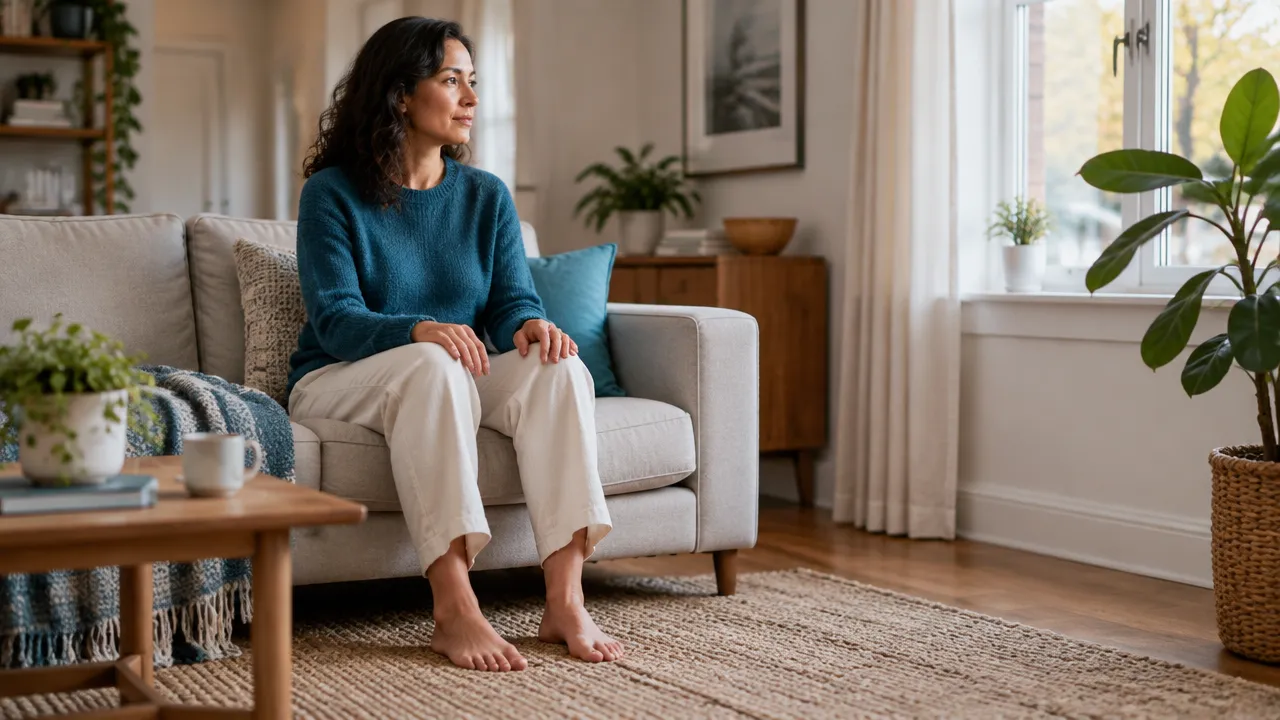
If focusing on breath or body sensations increases discomfort, shift your attention outward, keep your eyes open, or stop. Grounding should support choice, not become another task you feel obliged to perform. You can explore other ways to pause before responding when a moment feels charged.
Why do routines and relationships matter?
A single exercise cannot remove every source of strain. Sleep disruption, workload, conflict, uncertainty, health concerns, and lack of support can all shape how manageable a day feels. Regulation is partly personal and partly connected to the conditions around you.
Instead of asking only, “How do I calm down?”, consider, “What is keeping this pressure in place?” Maybe you need to clarify a request, take a short break, set a boundary, or ask someone for practical support. Small routines, such as a screen-free transition after work or a brief morning check-in, can create predictable moments to notice your needs. Consistency matters more than building an elaborate routine.
When is professional support a good next step?
Consider talking with a qualified health professional if distress is persistent, worsening, interfering with everyday activities, or difficult to manage alone. Physical symptoms can have causes beyond stress, so avoid self-diagnosing based on a list of common sensations. A clinician can help assess what is happening and discuss options suited to your circumstances.
If an exercise brings up intense memories, panic, dizziness, or a sense of being less safe, stop and orient to what feels manageable. You do not need to push through a technique to prove that it works. Seek urgent medical help for severe, sudden, or alarming symptoms.
Frequently asked questions
What are practical ways to calm my nervous system?
Start with one small signal of safety and choice: place both feet on the floor, look around the room, and let your exhale be comfortable rather than forced. If that feels uncomfortable, open your eyes, move, or stop. A useful practice supports awareness, not pressure to feel calm immediately.
How can I get out of survival mode?
Treat “survival mode” as a description of how you feel, not a diagnosis. Notice what is happening in your body and surroundings, reduce one manageable demand if possible, and choose a grounding action that feels safe. If the state persists or interferes with daily life, seek professional support.
How long does it take to regulate your nervous system?
There is no reliable fixed timeline. Your response can vary with the situation, health, past experiences, available support, and the consistency of helpful practices. Aim to notice small changes in flexibility and recovery rather than expecting a permanent calm state or assuming that a difficult day means you have failed.
Can breathing exercises help regulate the nervous system?
A comfortable, unforced breathing practice may help some people feel steadier, but it is not a guaranteed switch or a substitute for care. Try a natural inhale and slightly longer, easy exhale for a few breaths. Stop if you feel dizzy, panicky, or more uncomfortable.
When should I seek professional help?
Talk with a qualified health professional if distress is persistent, getting worse, disrupting sleep or daily activities, or difficult to manage alone. Physical symptoms can have many causes, so do not assume they are only stress. Seek urgent medical assessment for severe, sudden, or alarming symptoms.